
Physiotherapy Trends in 2026: Introduction
How Physiotherapy Has Evolved Over the Years
There are many physiotherapist in Navsari or physiotherapist near me who want to know what will be the trend of physiotherapy in 2026. The last decade brought remarkable changes to how we approach physical rehabilitation. Traditional methods that depended solely on manual techniques have given way to technology-enhanced treatments. Walk into any modern clinic today, and you’ll notice the difference immediately. Equipment looks futuristic. Treatment plans feel more personalized. Results come faster than before.
Why This Year Matters for Physiotherapy Innovation
We’re witnessing a turning point in healthcare delivery. People want treatments that fit into their busy lives. They expect measurable results, not vague promises. Insurance providers are updating their coverage policies to include newer treatment methods. These shifts are creating opportunities for both patients and healthcare providers.
Who Benefits from Understanding These Physiotherapy Trends
Whether you’re recovering from an injury or running a healthcare practice, staying informed matters. Patients gain knowledge to make better treatment choices. Healthcare professionals discover new tools to enhance their practice. Clinic administrators find practical insights about equipment upgrades. Students preparing to enter this field get a clear picture of what lies ahead.
What This Guide Covers
This comprehensive guide explores six major developments shaping physical rehabilitation today. You’ll discover how technology integrates with traditional treatment methods. Each section includes practical advice you can apply immediately. We’ll examine benefits for everyone involved from the person seeking relief to the therapist providing care.
Trend 1: Tele-Rehab Benefits and Virtual Care Solutions
Understanding Remote Physiotherapy Services
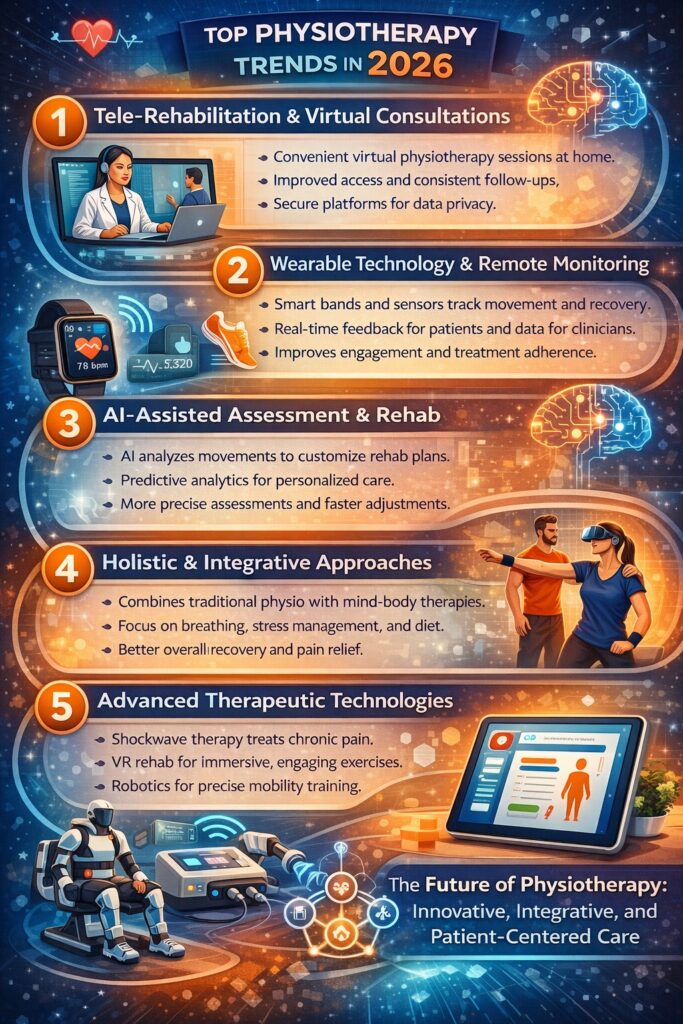
Remote treatment delivery has transformed healthcare access. Instead of traveling to a clinic, you connect with your therapist through video technology. Your smartphone or laptop camera becomes the window through which your therapist observes your movements. They provide real-time guidance as you perform exercises in your living room. While this differs from hands-on manipulation, many conditions respond well to this approach.
Why Virtual Consultations Are Growing in 2026
Convenience drives this remarkable growth. Busy professionals appreciate saving commute time. Parents managing young children find home-based sessions practical. Elderly individuals in rural areas now access specialists from major cities. Mobile applications have simplified the entire process—booking, attending sessions, and tracking progress happens through one platform.
Key Tele-Rehab Benefits for Patients
Time savings stand out as the primary advantage. You eliminate travel expenses and waiting room delays. Research consistently shows improved treatment adherence when therapy occurs at home. Your therapist can schedule brief check-ins between major appointments. They watch your exercise form through the camera and provide instant corrections. Working parents particularly appreciate this flexibility.
How Clinics Implement Virtual Physiotherapy Services
Progressive healthcare facilities now use specialized telehealth platforms. These systems combine video calling with exercise demonstration libraries and progress monitoring dashboards. Protecting patient information remains paramount—clinics follow strict security protocols. Appointment scheduling has evolved to accommodate both virtual and in-person visits. Staff receive training to troubleshoot technical difficulties quickly.
Growth of Virtual Physiotherapy Appointments
Recent surveys show dramatic increases in remote healthcare visits. Many practices report that virtual appointments now comprise 30-40% of their total bookings. Patients especially value this option for routine follow-ups and minor concerns. The upward trend continues as more people embrace digital healthcare solutions.
You may like: Back Pain Physiotherapy at Home in Navsari and Silvassa
Trend 2: Wearable Technology in Physiotherapy
What Wearables Mean for Modern Rehabilitation
Small electronic devices worn on your body now play a significant role in recovery. These gadgets attach to various body parts—wrists, ankles, or back. Advanced sensors inside measure multiple parameters: step count, posture quality, joint angles, and exercise repetitions. Some even detect muscle activation patterns. The collected information transmits directly to your healthcare provider’s system.
Real-Time Movement Tracking and Feedback
Instant corrections represent a game-changing advantage. If your squat form needs adjustment, the device alerts you immediately. You don’t wait days for your next appointment to learn you’ve been practicing incorrectly. The precision of these measurements exceeds human observation. Your therapist knows exactly how many repetitions you completed and whether your technique was correct. Progress becomes quantifiable over time.
How Patients Benefit from Wearable Technology
Motivation increases when you see concrete evidence of improvement. Colorful graphs display your daily achievements. Many people enjoy beating their previous performance records. The devices send reminders when it’s time for your exercise session. Encouraging notifications arrive after you complete your daily goals. This personalized support helps maintain commitment during challenging recovery periods.
Clinical Integration of Wearable Devices
Forward-thinking therapists review device data before each appointment. This preparation allows them to identify movement problems quickly. Treatment adjustments become more precise and targeted. Valuable session time focuses on addressing specific issues rather than gathering basic information. Some practices include wearable devices in their treatment packages.
Trend 3: AI in Physiotherapy Assessment and Treatment
How Artificial Intelligence Supports Therapists
Computer intelligence now assists healthcare professionals in delivering better care. Sophisticated software analyzes your movements through camera footage instantly. It detects subtle problems that might escape even experienced eyes. The technology compares your patterns against vast databases of movement information. This leads to more accurate diagnoses and faster treatment planning. Think of it as a highly intelligent assistant enhancing your therapist’s capabilities.
Practical Applications of AI in Rehabilitation
Injury prediction represents one exciting application. Athletes use these tools to identify vulnerabilities before problems occur. The software examines how you walk, run, or perform sports movements. It highlights weak areas requiring attention. Automated program generation based on your specific progress is another breakthrough. As you improve, difficulty levels adjust automatically. Some systems detect incorrect home exercise performance and send immediate corrections to your phone.
Better Outcomes Through AI-Assisted Care
Treatment becomes more efficient and effective. Your therapist makes precise adjustments based on detailed AI analysis. Recommendations match your exact needs rather than following generic protocols. Recovery timelines shorten because treatment targets specific issues accurately. The trial-and-error period decreases significantly. Results become visible in less time.
Starting with AI Technology in Clinical Practice
Affordable entry-level tools now exist for smaller practices. Basic motion analysis applications work with standard smartphones or tablets. Healthcare providers should begin with simple systems before major investments. Proper staff training ensures effective tool utilization. Therapists must understand that AI enhances rather than replaces their expertise. Patient privacy requires careful protection when implementing AI systems. Clear communication about data usage builds trust.
Trend 4: Holistic Physiotherapy Approaches
Understanding Whole-Body Treatment Philosophy
Modern physical rehabilitation looks beyond the injury site. It recognizes the deep connection between mental and physical health. Mental stress manifests as muscle tension. Poor sleep quality slows healing processes. This comprehensive approach examines lifestyle factors, emotional wellbeing, and daily habits. Your therapist asks about nutrition, sleep patterns, and stress levels. They understand that resolving a knee issue might require improving overall health.
Components of Integrative Care Methods
Breathing exercises form a key component for reducing stress and muscle tension. Deep, controlled breathing calms your nervous system and diminishes pain signals. Stress management techniques help you handle emotional pressures more effectively. Many therapists now provide basic nutritional guidance. They explain which foods reduce inflammation and accelerate healing. Some practices teach meditation or progressive relaxation techniques. These complement traditional exercises and manual treatments.
Patient Benefits of Holistic Physiotherapy
People experience superior pain relief with comprehensive approaches. Your body heals faster when you manage stress effectively and eat nutritiously. Many report feeling better overall, not just in the affected area. Sleep quality improves, which accelerates recovery. You acquire lifelong skills that prevent future injuries. This philosophy gives you greater control over your health outcomes.
Why Clinics Adopt Integrative Treatment Models
Healthcare providers notice higher satisfaction rates among patients receiving holistic care. Long-term results surpass those from exercise-only programs. Satisfied clients enthusiastically recommend their clinic to others. This approach also decreases injury recurrence rates. People develop sustainable healthy habits extending beyond their treatment period. Clinics differentiate themselves from competitors through comprehensive care offerings.
You may like: 3 Simple Stretches se Knee Pain mein Shandar Relief Paayen
Trend 5: Advanced Physiotherapy Equipment and Technology
Cutting-Edge Treatment Technologies
Contemporary clinics deploy powerful therapeutic tools. Shockwave therapy uses focused sound waves to penetrate deep into damaged tissues. It accelerates healing in conditions like tennis elbow and heel pain. Robotic assistance devices help patients relearn proper movements after strokes or severe injuries. These machines guide limbs through perfect motion patterns. Virtual reality rehabilitation transforms exercises into engaging game-like experiences. You wear special goggles and complete tasks in computer-generated environments. This technology excels in balance training and neurological rehabilitation.
Research Supporting Advanced Equipment
Scientific studies demonstrate impressive results from these technologies. Shockwave therapy reduces chronic pain by 60-80% in many cases. Research proves its superiority over conventional methods for specific conditions. Robotic therapy helps stroke survivors regain function faster. Virtual reality rehabilitation improves balance and reduces fall risk in older adults. The engaging nature of VR helps people exercise longer without fatigue. Medical journals publish hundreds of supporting studies annually.
Patient Experience with Modern Equipment
People appreciate these treatments because they cause less discomfort. Shockwave therapy often eliminates the need for painful injections or surgery. Virtual reality exercises feel entertaining rather than tedious. You forget you’re doing therapy because it resembles playing video games. The technology provides objective data showing your improvement. You see precise measurements of strength, balance, and movement quality. This clear information maintains motivation throughout treatment.
Implementing Advanced Technology in Clinics
These innovations require substantial financial investment. Shockwave machines cost between 3-8 lakh rupees. Virtual reality systems are more accessible at 50,000-2 lakh rupees. Staff need comprehensive training for safe, effective equipment operation. However, practices recover costs relatively quickly because patients prefer advanced treatments. Premium pricing for specialized services becomes justifiable. Modern equipment attracts new clients and enhances clinic reputation.
You may like: 10 Reasons Dr. Isha Singh Is the Best Physiotherapist in Navsari
Trend 6: Preventive Physiotherapy and Personalized Treatment Plans
Shift Toward Proactive Healthcare
Physical rehabilitation is evolving from reactive to preventive care. Previously, people sought help only after injury occurred. Now, clinics offer proactive screening to detect problems early. They assess movement patterns before pain develops. Mobility coaching teaches proper movement during daily activities. Athletes receive pre-season evaluations identifying vulnerable areas. Office workers learn correct posture before back pain starts. This preventive philosophy stops injuries before they happen.
Customized Treatment Protocols
Every individual now receives a unique recovery plan. Your therapist considers age, occupation, hobbies, and fitness aspirations. A cricket player receives different exercises than a retired person. The program accommodates your daily schedule and lifestyle constraints. Assessment data guides every decision. Your plan evolves as you progress. Some people need strength development while others require flexibility work. This customization proves more effective than standardized exercise handouts.
Advantages of Preventive and Personalized Care
Preventive strategies significantly reduce repeat injuries. People stay healthy longer and avoid recurring problems. You develop body awareness that protects you for life. Long-term commitment improves because the program matches your actual requirements. Healthcare facilities benefit from loyal clients who return for regular maintenance. Prevention programs create consistent revenue throughout the year. Satisfied individuals become health-conscious advocates who widely recommend the practice. Both parties save money by avoiding serious injuries.
Practical Tips for Physiotherapy Patients in 2026
Preparing for Modern Treatment Methods
Begin by researching facilities offering contemporary services. Visit their websites to learn about available technology and remote care options. Ask friends for recommendations about progressive practices. Maintain an open attitude toward trying innovative treatment approaches.
Apps, Devices, and Important Questions
Download health monitoring applications before starting treatment. Many free apps help track daily activity levels. Consider purchasing a basic fitness tracker if financially feasible. Ask your healthcare provider these crucial questions: Do you provide virtual consultations? What technology do you use during treatment? Can I view my progress data? Do you offer preventive screening services? Will my treatment plan be personalized?
When to Choose Virtual Care vs In-Person Visits
Remote care works excellently for follow-up appointments and exercise coaching. Use it for minor discomfort or routine progress checks. However, schedule in-person visits for initial assessments. New injuries require physical examination. Severe pain demands hands-on treatment. Post-surgical rehabilitation should begin at the clinic. Conditions requiring manual therapy need physical intervention. Discuss with your provider which format suits your specific situation best.
Strategic Advice for Physiotherapy Clinics in 2026
Planning for Technology Integration
Develop a clear strategy for adopting innovations this year. Begin with one or two developments matching your patient demographics. Avoid attempting everything simultaneously. Evaluate your current clientele and their common conditions. Select technologies addressing their specific needs. Establish realistic timelines and budgets for each upgrade.
Training, Investment, and Patient Education
Invest in thorough staff training before introducing new equipment. Your team must feel confident using technology effectively. Allocate funds for both hardware and software solutions. Start with affordable options like basic telehealth platforms or simple analysis applications. Educate clients about new offerings through posters, social media, and direct conversations. Explain advantages clearly using simple, understandable language.
Measuring Success and Satisfaction
Monitor monthly usage of new services. Track treatment outcomes to verify technology improves results. Distribute simple feedback surveys after appointments. Ask what clients appreciated and what needs improvement. Calculate revenue from new services against investment costs. Review client retention rates and referral statistics. Adjust strategy based on actual data rather than assumptions. Satisfied clients and positive outcomes validate your investment decisions.
Conclusion: The Future of Physiotherapy
Summary of Major Developments
Physical rehabilitation in 2026 presents exciting possibilities for everyone involved. Remote consultations deliver expert care to your home. Wearable devices monitor progress with precision. Artificial intelligence makes treatment faster and more accurate. Comprehensive approaches heal your entire body, not just symptoms. Advanced equipment minimizes pain and accelerates recovery. Preventive strategies stop injuries before they start.
Taking the Next Step
Don’t delay experiencing modern rehabilitation methods. Schedule a consultation at a progressive facility near you. Inquire about the technologies discussed throughout this guide. Share this information with family and friends needing physical therapy. Subscribe to health blogs for ongoing updates and expert guidance.
Looking Ahead
Physical rehabilitation will continue advancing rapidly in coming years. Technology will become increasingly accessible and affordable. More people will receive customized, effective care. The emphasis will shift from treating pain to building lifelong wellness. The future of physiotherapy extends beyond recovery—it’s about empowering you to live your healthiest, most active life possible.
Common Questions About Physiotherapy Trends in 2026
What exactly is tele physiotherapy?
Tele-physiotherapy means receiving treatment through video calls from home. Your therapist connects online using your phone or computer. They observe your movements through the camera and guide exercises in real time. You ask questions and receive immediate feedback similar to face-to-face visits. This method works well for follow-up sessions, exercise coaching, and minor conditions. However, initial assessments and hands-on treatments still require clinic attendance.
Do wearable devices actually help with rehabilitation?
Yes, wearable technology significantly improves rehabilitation outcomes. Research confirms they enhance patient results substantially. These devices track movements accurately throughout your day. They provide instant feedback when exercise form is incorrect. This helps maintain proper technique between appointments. Wearables maintain motivation by displaying visual progress charts. Studies prove people using wearables follow treatment plans more consistently. They recover faster because therapists monitor continuously and adjust programs promptly.
Will AI replace human physiotherapists?
No, artificial intelligence will not replace healthcare professionals. It functions as a helpful tool, not a substitute. AI analyzes movement data and suggests treatment options efficiently. However, your therapist makes all final decisions about your care. They understand emotions, concerns, and individual circumstances. AI cannot provide human touch, empathy, and hands-on treatment. Consider AI like a calculator helping doctors work faster and more precisely. The therapist’s experience, judgment, and personal care remain irreplaceable. AI simply enables them to deliver superior treatment.