Physio Rehabilitation Technology: Introduction
Rehabilitation is no longer limited to basic exercises and manual therapy. Today, rehabilitation technology is changing the way patients recover from injuries, surgeries, and neurological conditions. From smart machines to digital systems, modern rehab technology tools are making physiotherapy more accurate, faster, and more effective than ever before.
Many patients hear terms like electrotherapy, robotic rehabilitation, or virtual reality rehabilitation during treatment, but often do not understand what these tools actually do. This creates confusion and sometimes fear. Understanding rehabilitation technology helps patients feel confident and involved in their recovery process.
Modern physiotherapy technology is designed to reduce pain, improve movement, and track progress with precision. Whether it is a simple TENS unit for pain relief or advanced digital rehabilitation technology for neurological recovery, each tool has a specific purpose. Knowing who needs which rehabilitation technology tool is just as important as the treatment itself.
This rehabilitation technology glossary will explain the most commonly used rehab technology tools, how they work, and who benefits from them. By the end of this guide, patients, caregivers, and healthcare professionals will clearly understand how rehabilitation technology supports safer, smarter, and faster recovery.
What Is Rehabilitation Technology and Why It Matters
Rehabilitation technology refers to the use of specialized tools, equipment, and digital systems designed to support recovery, restore movement, and improve functional ability. Unlike traditional rehabilitation methods that rely mainly on manual techniques, modern rehab technology tools combine science, engineering, and physiotherapy to deliver precise and measurable results.
At its core, rehabilitation technology helps therapists understand how the body moves, where limitations exist, and how recovery is progressing. Advanced physiotherapy technology allows accurate assessment of muscle strength, joint mobility, nerve response, and balance. This data-driven approach helps design more effective rehabilitation programs tailored to each patient’s needs.
The importance of rehabilitation technology becomes clear when dealing with complex conditions such as post-surgical recovery, sports injuries, stroke rehabilitation, or chronic pain. In these cases, rehab technology tools improve treatment accuracy, reduce recovery time, and enhance patient safety. Digital rehabilitation technology also enables continuous progress tracking, which motivates patients and ensures timely adjustments to therapy plans.
Another reason rehabilitation technology matters is patient engagement. Tools like interactive exercise systems and virtual rehabilitation platforms make therapy more engaging and less intimidating. Patients feel more involved in their recovery, which leads to better compliance and outcomes.
In short, rehabilitation technology bridges the gap between traditional therapy and modern healthcare, making rehabilitation smarter, faster, and more effective for patients who need structured and reliable recovery support.
Categories of Rehabilitation Technology Tools
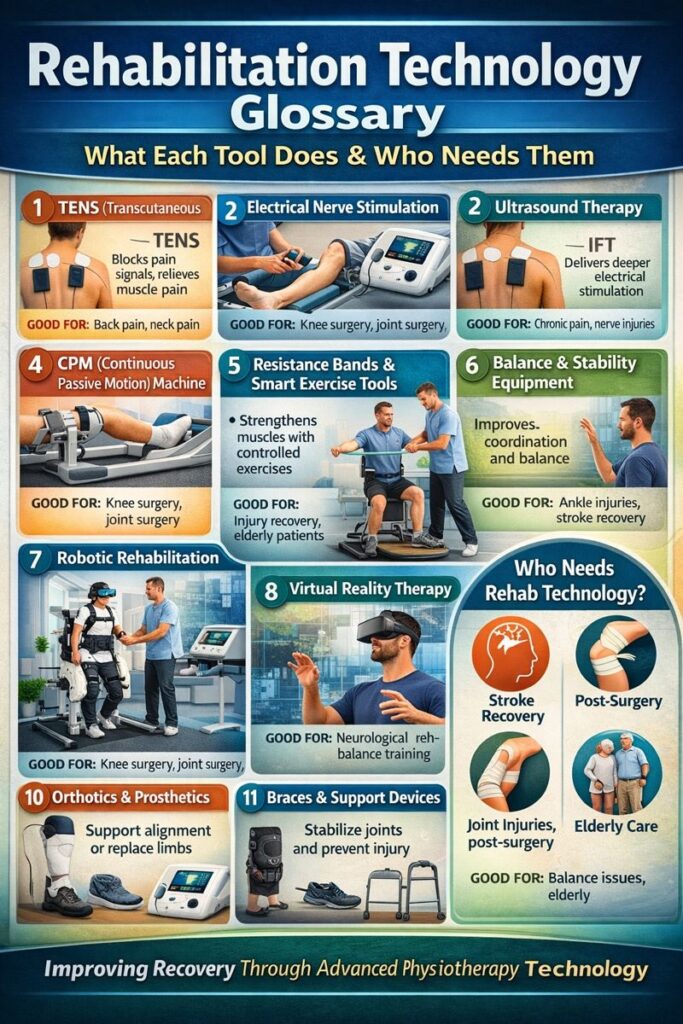
To understand rehabilitation technology clearly, it is helpful to divide it into categories. Each category of rehab technology tools serves a specific purpose in the rehabilitation process. Knowing these categories helps patients and caregivers understand why a particular physiotherapy technology is used during treatment.
The first category is diagnostic rehabilitation technology. These tools are used to assess movement, muscle strength, joint range, and balance. Diagnostic rehabilitation technology helps physiotherapists identify problem areas and track progress over time. Without accurate assessment, effective rehabilitation is not possible.
The second category includes therapeutic rehabilitation technology. These are tools designed to reduce pain, improve mobility, and promote healing. Electrotherapy machines, ultrasound therapy devices, and exercise-based rehab technology fall under this group. Therapeutic physiotherapy technology is commonly used in clinics for injury recovery and post-surgical rehabilitation.
Another important category is assistive rehabilitation technology. These tools help patients perform daily activities safely. Braces, orthotics, walkers, and mobility aids support movement and independence. Assistive rehabilitation technology is especially useful for elderly patients and those with neurological conditions.
The final category is digital and advanced rehabilitation technology. This includes virtual rehabilitation systems, robotic rehabilitation technology, and wearable rehab devices. These advanced rehab technology tools provide real-time feedback and improve treatment precision.
Understanding these categories makes it easier to see how rehabilitation technology supports recovery at every stage.
Looking for Advanced Rehabilitation Technology in Navsari or Silvassa?
If you are experiencing pain, stiffness, injury, or post-surgery recovery issues, consulting a qualified physiotherapist in Navsari or Silvassa can help you recover safely and faster.
Modern rehabilitation technology combined with expert physiotherapy ensures:
- Accurate diagnosis
- Personalized treatment plans
- Faster and safer recovery
Contact a trusted Physiotherapist in Navsari or Silvassa to understand which rehabilitation technology is right for you.
Early assessment leads to better long-term results.
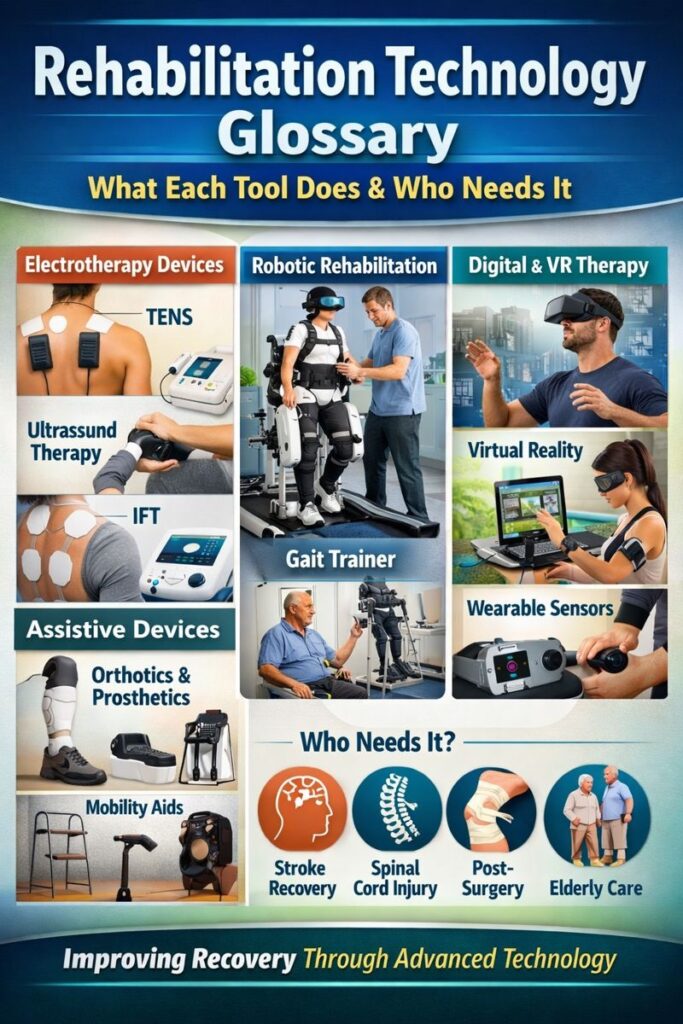
Electrotherapy Devices in Rehabilitation Technology
Electrotherapy is one of the most widely used components of rehabilitation technology. These rehab technology tools use controlled electrical or sound energy to reduce pain, improve muscle function, and accelerate healing. Electrotherapy devices are commonly used in physiotherapy clinics because they are safe, effective, and suitable for a wide range of conditions.
a. TENS (Transcutaneous Electrical Nerve Stimulation)
TENS is a popular electrotherapy device in rehabilitation technology. It delivers mild electrical impulses through the skin to stimulate nerves. The main purpose of TENS is pain relief. This rehab technology tool blocks pain signals from reaching the brain and promotes the release of natural pain-relieving chemicals.
Who needs it:
Patients with back pain, neck pain, arthritis, post-surgical pain, and sports injuries often benefit from TENS therapy. It is commonly used in physiotherapy technology for pain management.
b. Ultrasound Therapy Machine
Ultrasound therapy is another important rehabilitation technology tool. It uses high-frequency sound waves to reach deep tissues. This helps improve blood flow, reduce inflammation, and speed up tissue healing.
Who needs it:
Ultrasound rehabilitation technology is useful for muscle strains, ligament injuries, tendon problems, and joint stiffness. It is widely used in physiotherapy clinics for soft tissue healing.
c. IFT (Interferential Therapy)
IFT is an advanced electrotherapy method in rehabilitation technology. It uses intersecting electrical currents to reach deeper tissues with less discomfort. This rehab technology tool is effective for pain reduction and muscle stimulation.
Who needs it:
Patients with chronic pain, nerve pain, and muscle weakness often benefit from IFT. It is commonly included in physiotherapy technology treatment plans.
Electrotherapy devices play a crucial role in rehabilitation technology by supporting pain relief and early-stage recovery.
Exercise-Based Rehabilitation Technology Tools
Exercise-based tools are a core part of rehabilitation technology. These rehab technology tools focus on restoring strength, flexibility, balance, and movement control. Unlike general fitness equipment, exercise-based physiotherapy technology is designed specifically for safe and controlled rehabilitation.
a. CPM (Continuous Passive Motion) Machine
A CPM machine is an important device in rehabilitation technology, especially after surgery. It gently moves a joint through a controlled range of motion without patient effort. This prevents stiffness and improves circulation.
Who needs it:
Patients recovering from knee replacement surgery, ligament repair, or joint surgeries benefit from CPM rehabilitation technology. It is widely used in post-operative physiotherapy programs.
b. Resistance Bands and Smart Exercise Tools
Resistance bands are simple yet effective rehab technology tools used for strengthening muscles. Modern rehabilitation technology also includes smart exercise tools that provide guided movement and resistance control.
Who needs it:
Patients recovering from injuries, elderly individuals, and post-surgical patients use these tools to safely rebuild strength using physiotherapy technology.
c. Balance and Stability Training Equipment
Balance boards, wobble cushions, and stability platforms are essential rehabilitation technology tools. They help improve coordination, posture, and joint stability.
Who needs it:
People recovering from ankle injuries, knee injuries, strokes, or balance disorders benefit from balance-based rehab technology tools.
Exercise-based rehabilitation technology ensures controlled recovery and reduces the risk of re-injury.
Advanced Digital Rehabilitation Technology
Digital innovation has taken rehabilitation technology to the next level. Advanced digital rehab technology tools use software, sensors, and intelligent systems to improve accuracy, engagement, and recovery outcomes. These tools are especially helpful for complex and long-term rehabilitation cases.
a. Virtual Reality (VR) in Rehabilitation
Virtual reality is an emerging area of rehabilitation technology. VR systems create interactive environments where patients perform therapeutic movements in a virtual setting. This form of digital rehabilitation technology improves coordination, balance, and motor control.
Who needs it:
Patients recovering from stroke, neurological disorders, and balance problems benefit from VR rehabilitation technology. It is also used to improve motivation during physiotherapy sessions.
b. AI-Based Rehabilitation Systems
Artificial intelligence is transforming rehabilitation technology by offering personalized treatment plans. AI-based physiotherapy technology analyzes patient data and adjusts exercises based on performance and progress.
Who needs it:
Patients requiring long-term rehabilitation, such as neurological or orthopedic cases, benefit from AI-driven rehab technology tools that adapt to their recovery pace.
c. Wearable Rehabilitation Technology
Wearable devices are a fast-growing segment of rehabilitation technology. These tools include smart sensors that track movement, posture, and muscle activity in real time. Wearable rehab technology allows continuous monitoring beyond the clinic.
Who needs it:
Patients who need home-based rehabilitation and progress tracking benefit from wearable physiotherapy technology.Advanced digital rehabilitation technology enhances precision, engagement, and treatment outcomes.
Advanced digital rehabilitation technology enhances precision, engagement, and treatment outcomes.
Robotic Rehabilitation Technology
Robotic systems represent one of the most advanced forms of rehabilitation technology. These rehab technology tools use programmable mechanical devices to assist or guide patient movement during therapy. Robotic rehabilitation technology is designed to deliver precise, repetitive, and controlled movements, which are essential for neurological and complex physical recovery.
Robotic physiotherapy technology helps retrain the brain and muscles by promoting correct movement patterns. These systems can adjust resistance, speed, and range of motion based on the patient’s ability, making rehabilitation both safe and effective.
Types of Robotic Rehabilitation Technology
Common robotic rehab technology tools include robotic gait trainers, robotic arm therapy devices, and exoskeleton systems. These tools support walking, arm movement, and posture correction.
Who Needs Robotic Rehabilitation Technology?
Robotic rehabilitation technology is especially beneficial for stroke patients, spinal cord injury patients, and individuals with neurological disorders. It is also used in severe orthopedic rehabilitation where controlled movement is critical.
By offering accuracy and consistency, robotic rehabilitation technology improves outcomes and reduces the risk of improper movement during recovery.
Assistive Rehabilitation Technology Devices
Assistive devices are an essential part of rehabilitation technology. These rehab technology tools are designed to support movement, improve independence, and enhance safety during daily activities. Assistive physiotherapy technology helps patients function better while recovering from injury or managing long-term conditions.
a. Orthotics and Prosthetics
Orthotics and prosthetics are widely used assistive rehabilitation technology devices. Orthotics support or correct joint alignment, while prosthetics replace missing limbs. These tools improve mobility, balance, and comfort.
Who needs them:
Patients with limb injuries, deformities, post-amputation conditions, or neurological disorders benefit from this rehabilitation technology.
b. Braces and Support Devices
Braces are common rehab technology tools used to stabilize joints and prevent further injury. Knee braces, back supports, and ankle braces are frequently used in physiotherapy technology programs.
Who needs them:
Patients with ligament injuries, joint instability, or post-surgical recovery benefit from braces as part of rehabilitation technology.
c. Mobility Aids
Mobility aids such as walkers, canes, and crutches are essential assistive rehabilitation technology devices. They help reduce fall risk and support safe movement.
Who needs them:
Elderly individuals, post-surgery patients, and those with balance issues benefit from mobility-based rehab technology tools.
Assistive rehabilitation technology helps patients regain confidence and independence during recovery.
Who Needs Rehabilitation Technology?
Rehabilitation technology is not limited to one type of patient. These rehab technology tools are used across a wide range of conditions and age groups. The need for rehabilitation technology depends on the type of injury, medical condition, and recovery goals.
Patients recovering from sports injuries often require rehabilitation technology to restore strength, flexibility, and coordination. Exercise-based and electrotherapy rehab technology tools help reduce pain and speed up recovery.
Post-surgical patients also benefit greatly from physiotherapy technology. Tools such as CPM machines, ultrasound therapy, and digital rehabilitation technology support safe and structured healing after surgery.
People with neurological conditions, including stroke and spinal cord injuries, rely on advanced rehabilitation technology such as robotic rehabilitation and virtual rehabilitation systems. These tools help retrain movement and improve functional ability.
Elderly individuals benefit from assistive rehabilitation technology that improves balance, mobility, and independence. Wearable and monitoring rehab technology tools help track progress and reduce fall risk.
Ultimately, rehabilitation technology is selected by physiotherapists based on individual needs, ensuring safe and effective recovery for every patient.
Benefits of Using Rehabilitation Technology in Physiotherapy
The use of rehabilitation technology in physiotherapy offers multiple benefits for both patients and therapists. These advanced rehab technology tools improve treatment quality, safety, and recovery outcomes when compared to traditional rehabilitation methods alone.
One major benefit of rehabilitation technology is faster and more accurate recovery. Tools such as electrotherapy devices, exercise-based rehab technology, and digital rehabilitation systems help target affected muscles and joints precisely. This reduces pain, improves movement, and speeds up healing.
Another important advantage is personalized treatment. Modern physiotherapy technology allows therapists to customize rehabilitation programs based on patient data, progress tracking, and response to treatment. AI-based and wearable rehab technology tools adjust therapy intensity according to individual needs.
Rehabilitation technology also improves patient motivation and engagement. Interactive tools like virtual rehabilitation systems and robotic rehabilitation technology make therapy sessions more interesting and goal-oriented. This increases patient participation and consistency.
Safety is another key benefit. Controlled movement provided by rehab technology tools reduces the risk of incorrect exercises or re-injury. Continuous monitoring ensures early detection of problems during recovery.
Overall, rehabilitation technology enhances the effectiveness of physiotherapy by combining science, precision, and patient-centered care.
Why Choose Local Rehabilitation Technology Care?
Choosing a nearby physiotherapy center in Navsari or Silvassa offers convenience, continuity of care, and personalized attention. Local clinics use modern physiotherapy technology while understanding lifestyle, work patterns, and common injury risks of patients in the region.
Benefits include:
- Easy follow-up sessions
- Locally accessible rehab technology tools
- One-to-one physiotherapist guidance
A trained physiotherapist in Navsari or Silvassa can guide you through every stage of rehabilitation using appropriate technology.
How to Choose the Right Rehabilitation Technology Tool
Choosing the right rehabilitation technology is crucial for safe and effective recovery. Not every rehab technology tool is suitable for every patient. Selection depends on the type of injury, medical condition, age, and rehabilitation goals.
The first step is professional assessment. A qualified physiotherapist evaluates movement, strength, pain level, and functional limitations. Based on this evaluation, the most appropriate physiotherapy technology is selected. Using incorrect rehabilitation technology can slow recovery or cause discomfort.
Another important factor is the stage of recovery. Early stages may require electrotherapy or assistive rehabilitation technology, while later stages focus on exercise-based or digital rehabilitation technology. Advanced tools like robotic rehabilitation technology are chosen for complex neurological conditions.
Safety and customization are also essential. Modern rehab technology tools allow controlled intensity and progress tracking. Digital and wearable rehabilitation technology helps monitor performance and prevent overuse.
Most importantly, rehabilitation technology should always be used under professional guidance to ensure effective and injury-free recovery.
For more information you can also visit Mayo Clinic – Physical Therapy & Rehabilitation site
Conclusion: The Future of Rehabilitation Technology
Rehabilitation technology is transforming the way physiotherapy is delivered. From basic electrotherapy devices to advanced robotic and digital systems, modern rehab technology tools offer faster, safer, and more personalized recovery.
Understanding what each rehabilitation technology tool does and who needs it empowers patients to participate actively in their rehabilitation journey. Whether it is pain relief, mobility improvement, or neurological recovery, physiotherapy technology plays a vital role at every stage.
As technology continues to evolve, the future of rehabilitation technology will focus on greater precision, home-based monitoring, and patient-centered care. Clinics and patients who adopt advanced rehab technology will benefit from better outcomes and improved quality of life.
Informed use of rehabilitation technology ensures that recovery is not just about healing—but about regaining confidence, independence, and long-term physical well-being.
Book a Physiotherapy Consultation in Navsari or Silvassa
Understanding rehabilitation technology is the first step. The next step is professional evaluation.
If you or a family member needs:
- Pain relief
- Injury rehabilitation
- Post-surgery recovery
- Neurological or orthopedic physiotherapy
Consult an experienced physiotherapist in Navsari or Silvassa to receive evidence-based rehabilitation using modern physiotherapy technology.
The right rehabilitation technology, used at the right time, can change recovery outcomes.
FAQs – Rehabilitation Technology
Q1. What is rehabilitation technology?
Rehabilitation technology refers to medical tools and digital systems used in physiotherapy to restore movement, reduce pain, and improve physical function.
Q2. Who needs rehabilitation technology?
Patients recovering from injuries, surgeries, stroke, neurological disorders, chronic pain, and mobility issues benefit from rehabilitation technology.
Q3. Is rehabilitation technology safe?
Yes. When used under professional supervision, rehabilitation technology tools are safe, effective, and clinically validated.
Q4. What is the difference between physiotherapy and rehabilitation technology?
Physiotherapy is the treatment approach, while rehabilitation technology includes the machines and tools that support and enhance physiotherapy outcomes.
Q5. Does rehabilitation technology speed up recovery?
Yes. Rehabilitation technology improves accuracy, consistency, and monitoring, which often leads to faster and more effective recovery.